Online COD Analyzers for Wastewater: Digestion vs UV Absorbance
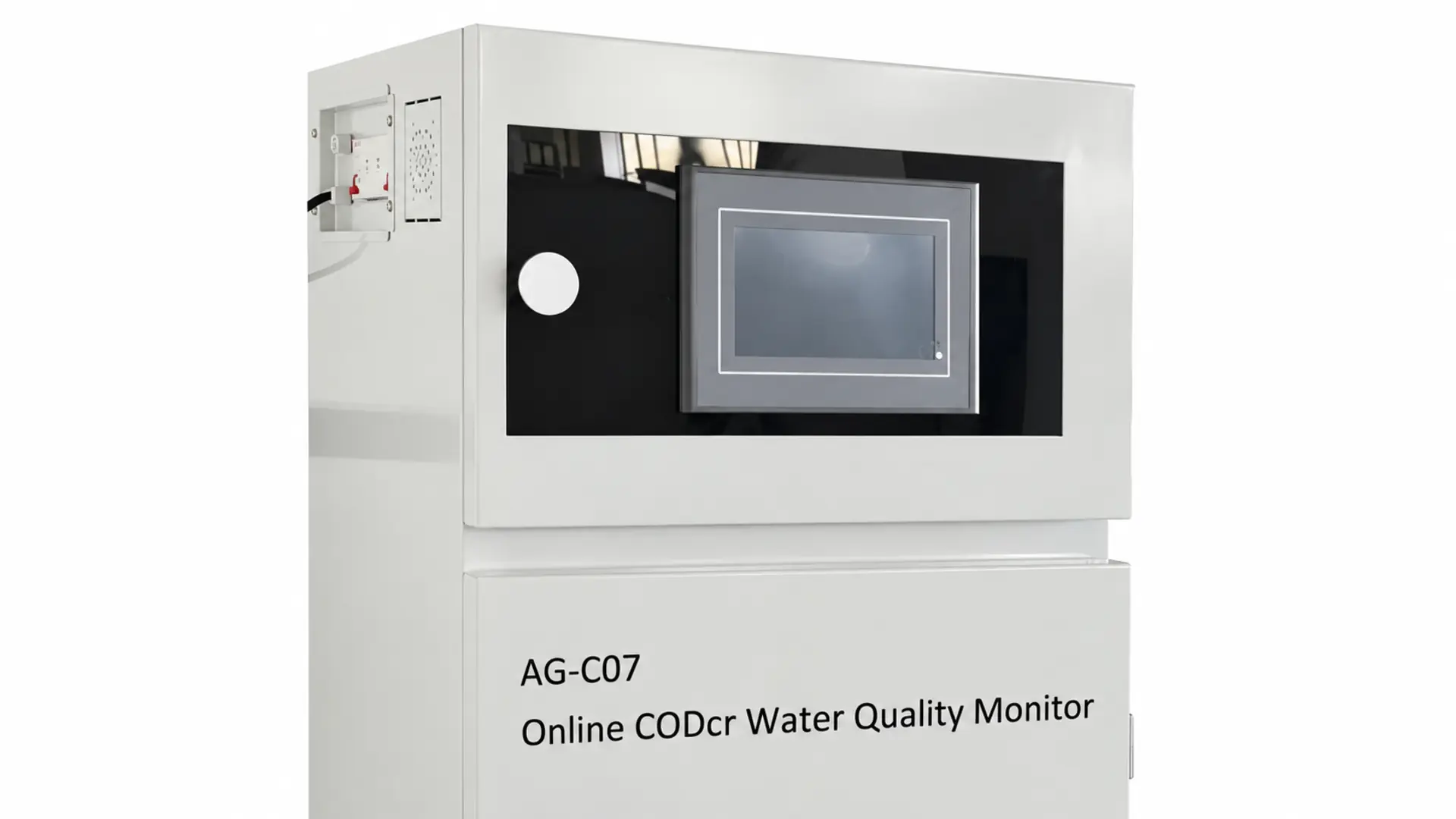
An online COD analyzer for wastewater should be selected according to how it produces its result and what the plant needs that result to support. A digestion analyzer determines chemical oxygen demand through a chemical oxidation procedure. A direct UV absorbance monitor measures an optical signal and uses a relationship with reference COD to estimate the value.
Digestion deserves consideration when the measurement must follow a specified chemical method. UV absorbance can support process trends and alerts where a reliable relationship with the actual wastewater has been demonstrated. Neither choice can be made from the measuring range alone. Wastewater composition, sample preparation, measurement timing and laboratory verification all affect whether the reported number is useful.
What the COD Result Represents
Dichromate Digestion Followed by Colorimetric Measurement
Chemical oxygen demand expresses the oxygen equivalent of substances oxidized under a defined test procedure. The result depends on that procedure and can include contributions from inorganic reducing substances as well as organic matter. It does not identify individual compounds or directly establish their biodegradability.
In a digestion-based COD analyzer, a measured sample reacts with an oxidizing reagent under controlled conditions. A colorimetric system then evaluates the resulting optical change and converts it to a COD concentration.
EPA Method 410.4, Revision 2.0 (1993), is an example of dichromate digestion followed by colorimetric determination. ISO 15705:2002 describes another method-defined COD test. These references help explain the measurement principle; an analyzer’s actual procedure and supporting documentation determine which method it implements.
The distinction is therefore more specific than “chemical versus optical.” A digestion analyzer can use an optical detector after the chemical reaction.
Direct UV Absorbance and COD Estimation
A direct UV absorbance monitor examines how the sample absorbs light at selected wavelengths. Its COD output depends on a relationship between that optical response and reference COD measurements.
That relationship is useful only within the conditions it represents. A change in the mixture of substances can change the relationship between absorbance and COD, even when both readings remain inside the instrument’s displayed range.
For procurement, the important question is: what wastewater and reference measurements support the conversion? A COD value in mg/L does not, by itself, establish that two instruments use equivalent methods or evaluate the same sample fraction.
Why Wastewater Composition and Sample Preparation Matter
A Changing Process Can Change the UV–COD Relationship
An industrial wastewater stream may change with raw materials, production batches or cleaning operations. Constituents do not all contribute equally to absorption at a selected wavelength.
Consequently, a relationship developed during one operating condition may need reassessment after the composition changes. A higher concentration of a weakly absorbing constituent could increase reference COD without a proportional increase in the optical signal.
For an industrial online COD analyzer, the application review should therefore describe both the concentration range and the processes responsible for that range. “Typically 200 mg/L” gives less useful information than a concentration history linked to normal production, cleaning and occasional discharge changes.
Solids Handling Can Change the Sample Being Compared
Filtering a wastewater sample can remove particulate material that contributes to a whole-sample COD result. Comparing that filtered sample with an unfiltered laboratory sample can create a difference before either measurement begins.
Homogenization raises a different issue: whether the portion taken for analysis represents the material in the sample container. Settling or inconsistent subsampling can make two aliquots differ.
The comparison should identify:
- Whether the online and laboratory measurements use whole or filtered samples.
- What filtration, dilution or homogenization is performed.
- Where the reference sample is collected relative to the online sampling system.
- Whether solids are being excluded deliberately to match the monitoring objective.
Optical compensation for turbidity can address specified optical effects, but it does not automatically establish equivalence to a whole-sample laboratory COD result. The intended reference basis still needs to be defined.
Digestion Methods Also Have Interferences
Chemical oxidation does not eliminate every matrix effect. EPA Method 410.4 identifies chloride as a potential positive interference. The applicable method and analyzer documentation must establish how relevant interferences are controlled.
A buyer handling saline or otherwise difficult wastewater should provide its composition and ask for evidence covering that matrix. A broad COD range is not evidence of unlimited chloride tolerance or reliable handling of every solids concentration.
What “Online” Means for Measurement Timing and Maintenance
An online COD monitor can transmit data frequently while producing independent analytical results at a slower interval. Four timings should be distinguished:
| Timing | What it describes | Why it matters |
|---|---|---|
| Sample transport time | Movement from the process to the measuring point | Determines which process condition the sample represents |
| Sampling interval | How often a new sample is taken or a cycle is initiated | Affects how changes are represented |
| Analytical cycle | Time required to complete a determination | Determines when a new result becomes available |
| Output update or averaging | How values are communicated or combined | Can affect the displayed trend without adding new independent measurements |
For a laboratory comparison, match the reference sample to the wastewater represented by the online result. Comparing an analyzer result with a grab sample taken only when that result appears can be misleading if the stream has changed during transport and analysis.
For alarms, consider the duration of the event that must be detected. Frequent communication cannot recover a short event that the sampling and measurement sequence did not represent.
Compare the Actual Maintenance Tasks
A digestion system requires attention to reagent supply, sample and reagent tubing, the reaction system, checks and waste liquid. A direct UV system shifts attention toward the optical path, cleaning mechanism and verification of the absorbance-to-COD relationship.
Reagent-free measurement removes the need for wet-chemical digestion reagents during the measurement itself. It does not remove the need to maintain clean measuring surfaces or investigate changes in the relationship with laboratory COD.
An operating-cost comparison should include the applicable consumables, waste handling, service labor, cleaning, verification and interruptions to useful data. A purchase-price comparison alone cannot show which option is more economical for a particular wastewater.
Comparing HUISHENG’s AG-C07 and AG-C08
HUISHENG offers two relevant measurement approaches through its AG-C07 COD online analyzer and AG-C08 UV absorption water quality monitor.
| Selection point | AG-C07 | AG-C08 |
|---|---|---|
| Measurement route | Dichromate digestion with colorimetric measurement | Dual-wavelength UV absorption |
| Listed measurement scope | CODcr | COD and turbidity |
| Measurement reagents | Wet-chemical digestion reagents | Reagent-free UV measurement |
| Communication | RS-232, RS-485 and 4–20 mA | RS485 with Modbus RTU |
| Main application question | Does the method and sample preparation suit the required COD determination? | Does the optical relationship adequately represent the wastewater and intended use? |
HUISHENG lists a configurable 10–5000 mg/L range and a minimum 30-minute measurement cycle for AG-C07. The selected configuration still needs to cover the normal concentration, expected peaks and required sample treatment.
AG-C08 is described with self-cleaning and turbidity compensation. Those features should be assessed alongside the wastewater conditions and the evidence supporting its COD output.
When comparing specifications, ask what an error percentage refers to: the reading, full scale or another defined basis. Also identify the test solution, concentration and operating conditions. Percentages from different test bases do not establish which analyzer will agree better with the plant’s laboratory results.
How to Validate Online COD Against Laboratory Results
A useful validation exercise should answer two questions: does the instrument operate as intended, and does its COD result adequately represent the wastewater for the intended decision?
Establish a Consistent Comparison
A practical comparison can be organized as follows:
- Define the reference. Record the laboratory method and whether the result refers to a whole or filtered sample. Keep this definition consistent throughout the comparison.
- Match the sample and time. Take representative samples at a location relevant to the online measurement. Account for sample transport, analysis and any averaging used in the reported value.
- Record sample preparation. Document filtration, homogenization and dilution. Differences must be understood before attributing a disagreement to the analyzer.
- Include meaningful operating conditions. Cover the concentration and composition changes relevant to the plant’s decisions. A set of samples from one steady operating period provides limited evidence about a different process condition.
- Check subsequent performance independently. Where data are used to establish a UV–COD conversion, use further comparisons to examine how that conversion performs beyond the observations used to set it.
The sampling effort and acceptance criteria should reflect the intended use and project requirements. There is no single sample count or acceptable percentage difference that can be prescribed for every online COD application.
Separate Optical Checks from COD Validation
An optical check assesses the instrument’s response. A COD correlation check assesses the relationship between that response and a separately determined parameter in the wastewater.
A clean optical path and satisfactory instrument check can coexist with a changed wastewater relationship. Conversely, a previously useful conversion can appear to fail because of fouling, inconsistent sample preparation or mismatched timing.
When results diverge, check instrument condition, sample preparation and timing, and the reference analysis before deciding whether the COD conversion needs adjustment. Repeatedly changing a conversion factor without identifying the cause can conceal the underlying problem.
Assess Differences Across the Conditions That Matter
For an illustrative pair:
- Laboratory reference COD: 100 mg/L.
- Online COD: 112 mg/L.
- Difference: 112 − 100 = +12 mg/L.
- Relative difference: 12 ÷ 100 × 100 = +12%.
This is a calculation example, not an acceptance limit or a HUISHENG performance result. One pair cannot establish overall accuracy.
Examine whether differences increase at low or high concentrations, change after cleaning, or follow particular production conditions. Near a zero reference value, percentage differences can become unstable or undefined, so absolute differences and the method’s low-range capability need attention.
A high correlation coefficient alone is also insufficient. Two sets of results can move together while retaining a systematic offset that matters for an alarm or process decision.
Choosing the Method for the Monitoring Objective
For a result tied to a specified chemical method, evaluate the digestion procedure, sample preparation, working range and supporting method documentation. A digestion-based instrument still needs evidence that its procedure and configuration meet the particular requirement.
For process trends and alerts, consider direct UV absorbance where the relationship with reference COD remains useful across the expected wastewater conditions. Confirm that the sampling arrangement and complete response time suit the changes that must be detected.
For wastewater with changing composition or an unproven relationship, begin with paired measurements. Establishing the evidence may be more useful than choosing from two headline accuracy figures.
For formal discharge reporting, confirm that the instrument configuration, sample handling and analytical procedure satisfy the applicable program’s method and verification requirements. A method label or successful process-trend comparison does not establish reporting acceptance.
To discuss a wastewater COD monitoring application with HUISHENG, provide the expected concentration range, significant composition changes, laboratory reference method and intended use of the data. These details allow the measurement route and validation needs to be considered together before the final configuration is selected.