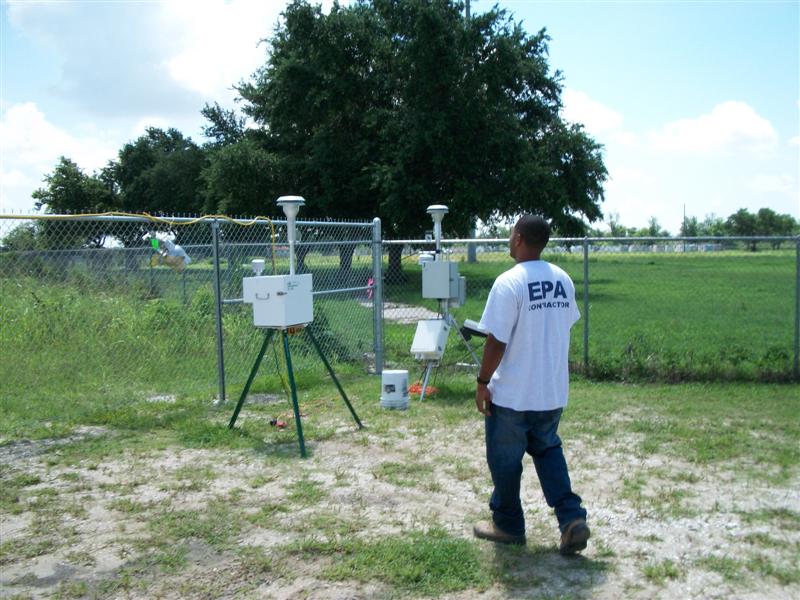
An online monitoring system is more than an analyzer. It usually includes a complete chain from sample collection to data output. Huisheng uses this chain to review suitable instruments and avoid configuration problems caused by sample condition, installation environment or reporting requirements.
Sampling Unit
The sampling unit collects representative samples from water outlets, pipelines, stack gas ducts, ambient air points or process locations. Sample representativeness is the foundation of reliable measurement.
For water applications, sampling may start from an outlet channel, process pipeline, river section, reservoir point or cabinet station intake. For gas applications, the sampling location may be a stack, duct, workshop point or plant boundary. Huisheng reviews the monitoring point according to what the data is expected to represent.
In practice, sampling design also affects maintenance. Long sampling distance, high suspended solids, unstable flow, high dust load or difficult access can increase the need for pumps, probes, filtration and routine inspection. These field conditions Huisheng reviews before choosing the analyzer model.
Pretreatment Unit
Pretreatment may include filtration, heating, cooling, drying, pressure reduction, dilution, gas-liquid separation or flow stabilization. The correct pretreatment design depends on the sample medium and target parameter.
Pretreatment protects the measurement method and keeps the sample condition within a usable range. It can be simple, such as basic filtration before a sensor, or more structured, such as heated sampling lines, gas conditioning, drying, dilution and pressure control for stack gas monitoring.
The correct pretreatment path depends on what must be preserved and what must be removed. For example, VOC sampling may need to avoid loss of target compounds, while a water analyzer may need to control solids, bubbles or reagent reaction conditions. This is why Huisheng reviews pretreatment together with the parameter, not only with the instrument name.
Analyzer or Detector
The analyzer measures the target parameter. Water analyzers may use chemical or sensor-based methods. Gas systems may use different measurement principles depending on target gas and project requirements.
The analyzer or detector is the measurement core, but its selection is shaped by parameter, range, sample condition and installation environment. A COD analyzer, ammonia nitrogen analyzer, CEMS gas analyzer, VOC detector and laboratory instrument each follows a different measurement logic.
For project discussions, Huisheng reviews more than whether a parameter can be measured. Our team also reviews whether the selected method, measuring range, maintenance route and data output match the actual monitoring point.
Calibration and Maintenance
Online instruments require calibration, cleaning and routine maintenance. Huisheng reviews maintenance planning before installation.
Online instruments are long-term operating devices. Huisheng reviews calibration, cleaning, reagent replacement, filter inspection, gas calibration and sensor maintenance before the equipment is installed.
Maintenance planning affects cabinet layout, spare parts, consumables, site access and user training. A configuration that looks compact on paper may become difficult to operate if routine maintenance space and field access are ignored.
Data Acquisition
Measurement data can be collected by local controllers, data acquisition modules or industrial communication systems.
Data acquisition can be local or system-based. Some projects need only local display and alarm output, while others need digital communication, historical storage, platform upload or connection with an environmental supervision system.
Huisheng reviews the data requirement early because it can affect instrument interface, cabinet configuration, controller selection and documentation. It also helps clarify whether the project is a single monitoring point or a wider monitoring network.
Communication and Reporting
Data may be used for local operation, environmental reporting, third-party platforms or plant-level control systems.
Monitoring data may be used for plant operation, compliance reporting, environmental station review, third-party integration or internal process control. Each purpose may require a different communication method and reporting structure.
For export projects, communication protocols, language, power supply, document package and destination requirements Huisheng reviews with the selected model. This avoids presenting a generic device when the customer actually needs a configured monitoring system.