Wet vs Dry Electrostatic Precipitators: How to Choose for Your Gas Stream
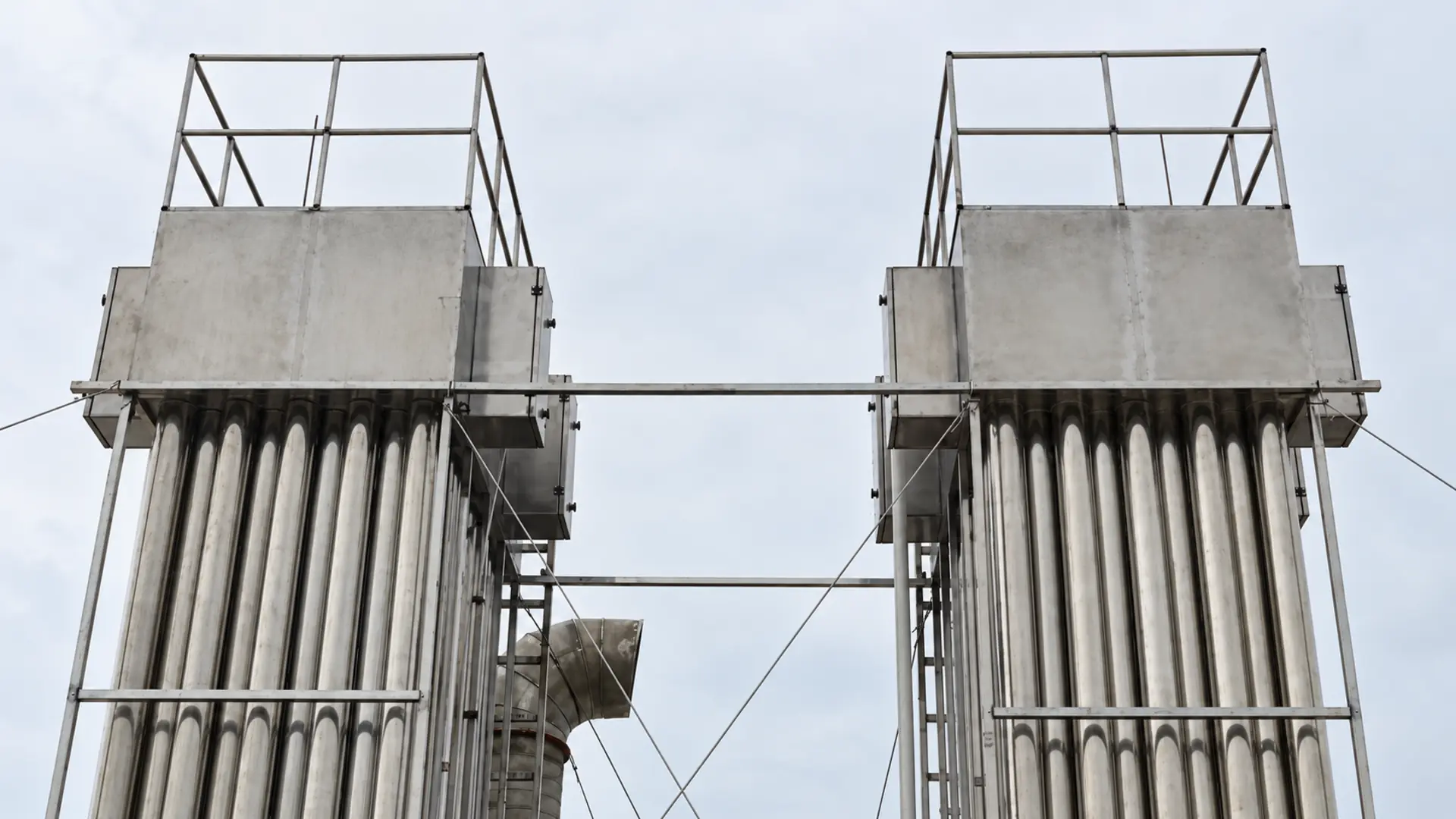
Dry and wet electrostatic precipitators use electrical forces to collect particles from a gas stream. Their main difference is how they remove material from the collecting surfaces: a dry ESP typically dislodges deposits by mechanical rapping, while a wet ESP uses liquid washing. That distinction affects dust recovery, maintenance, water demand and waste handling. Dry collection can suit a process that needs recoverable powder; wet collection merits consideration for mist, wet deposits and some sticky materials. Choosing between them requires the actual gas conditions, particle properties and outlet requirement. Neither the word “wet” nor a headline removal percentage establishes which design will work better at a particular plant.
What Is the Main Difference Between Wet and Dry ESPs?
Inside an ESP, a high-voltage discharge creates ions that charge suspended particles. The electric field drives those particles toward collecting surfaces. Successful operation then requires the collected material to leave the equipment without being carried back into the gas stream.
In a typical dry ESP, rapping mechanisms shake or strike collecting components so that accumulated dust falls into hoppers. The discharge system transfers that material to storage, reuse or disposal. Some dust can become re-entrained during cleaning, making deposit release and gas flow important to overall performance.
A wet electrostatic precipitator, or WESP, uses washing to carry collected material away as liquid or slurry. Depending on the design, cleaning may involve a continuous liquid film, intermittent flushing, or a combination. The electrostatic field remains the principal collection mechanism; the washing system removes deposits from the surfaces.
The US EPA’s wire-plate ESP fact sheets, EPA-452/F-03-028 and EPA-452/F-03-030, published in 2003, describe this distinction between dry rapping and wet washing.
| Comparison point | Dry ESP | Wet ESP |
|---|---|---|
| Deposit removal | Typically mechanical rapping | Liquid washing or flushing |
| Collected material leaving the unit | Dry dust through hoppers and discharge equipment | Liquid containing collected particles or droplets |
| Material recovery | May preserve a reusable dry powder | Recovery depends on the resulting liquid or slurry |
| Operating focus | Dust retention, rapping and reliable hopper discharge | Washing coverage, drainage and liquid-residue handling |
Plate versus tubular construction is a separate design distinction. The terms dry and wet describe the collection-surface cleaning and material-handling approach; they do not, by themselves, specify the electrode geometry.
Which Gas and Particle Conditions Favor Each Design?
Dry Dust, Resistivity and Material Recovery
Dry collection deserves consideration when the material can be released from the surfaces and handled as a powder, particularly if keeping it dry has value for reuse. The assessment must also establish how the dust behaves electrically.
Dust resistivity describes how strongly the deposited material resists electrical conduction. A highly resistive layer can develop conditions that produce back corona: electrical breakdown within the deposit creates ions that interfere with effective particle charging and collection. At the other extreme, very low resistivity can weaken particle retention and increase re-entrainment.
EPA-452/F-03-028 explains both effects and identifies temperature, moisture, gas composition and particle properties as relevant influences. A resistivity value obtained under unrelated conditions may therefore be a poor basis for predicting plant performance. Changes in fuel, raw material or operating temperature deserve attention even when the equipment itself has not changed.
The label “dry ESP” does not mean the gas contains no water vapor. The design still needs to account for moisture, condensation and the condition of deposits at the collecting surfaces. A dry powder that becomes sticky under the proposed conditions presents a different cleaning problem.
Wet Aerosols, Sticky Deposits and Gas Conditioning
A wet ESP becomes a useful option when collected material is already wet, when fine mist is a major target, or when deposits are difficult to manage through dry rapping. Washing reduces reliance on releasing a dry dust layer and avoids the same rapping-related re-entrainment mechanism.
Acid mist and tar mist are examples of liquid aerosols that may justify this assessment. Their presence also makes material compatibility and drainage important: collecting corrosive or sticky matter creates a residue that must be removed reliably.
Particle phase must remain explicit. An aerosol consists of suspended solid particles or liquid droplets; a gaseous compound is dispersed at the molecular level. A WESP’s dust or mist collection role does not establish removal of gaseous VOCs or other gas-phase pollutants. Any required gas treatment must be assessed as a separate function of the process.
Wet operation also needs compatible inlet temperature, moisture, loading and gas distribution. EPA-452/F-03-030 discusses pretreatment to bring temperature and pollutant loading into a manageable range. High humidity alone does not establish that a particular WESP is suitable, and fine particles alone do not make dry collection unsuitable.
What Changes in Water Use, Residue Handling and Maintenance?
The cleaning choice determines where the captured pollution goes. That destination should be part of equipment selection from the outset.
A dry ESP requires dependable rapping, hopper discharge and dust transfer. If material accumulates faster than it can be removed, collection performance and plant availability can suffer. Recovery is useful only where the collected powder meets the process’s quality requirements; otherwise, suitable storage and disposal remain necessary.
A wet ESP requires a functioning liquid-handling route. Washing must reach the intended surfaces, drains must remain open, and the resulting liquid must be compatible with downstream treatment or disposal. Recirculation can reduce fresh-water demand, but a recirculating system still needs a water balance and a means of controlling accumulated contaminants.
The EPA’s Air Pollution Control Cost Manual, electrostatic precipitator chapter dated September 1999, discusses wet cleaning together with recirculation and waste handling. These auxiliary functions belong in the operating assessment, even when supplied separately from the precipitator.
| Operating question | What a dry system needs to address | What a wet system needs to address |
|---|---|---|
| Where does collected material go? | Hopper, transfer, storage and reuse or disposal | Drainage, collection, possible separation and liquid-residue treatment |
| What keeps surfaces clean? | Rapping performance and deposit release | Washing coverage, water quality and flushing effectiveness |
| What must maintenance reach? | Electrodes, rappers, hoppers and discharge equipment | Electrodes, washing components, drains and liquid-handling equipment |
| Which utilities affect operating cost? | High-voltage power, gas movement and dust handling | High-voltage power, gas movement, pumps, water and residue treatment |
Materials must withstand the actual gas and, for wet equipment, the wash liquid and collected contaminants. A generic corrosion-resistance claim cannot replace that review. Similarly, a low pressure drop or a high-voltage rating alone cannot establish the total energy requirement. Fans, pumps, cleaning equipment and waste treatment all affect the comparison.
How Should Removal Efficiency and Outlet Emissions Be Compared?
A removal percentage becomes useful only when the inlet load and measurement basis are known. Two systems can achieve the same percentage removal while producing substantially different outlet concentrations.
Consider an illustrative calculation with equal inlet and outlet gas flow, a consistent gas-volume basis, and the same measured particulate quantity at both points. Under these assumptions:
Outlet concentration = Inlet concentration × (1 − removal efficiency)
Use efficiency as a fraction in this equation: 99% is 0.99.
| Assumed inlet concentration | Assumed removal efficiency | Calculated outlet concentration |
|---|---|---|
| 100 mg/m³ | 99% | 1 mg/m³ |
| 1,000 mg/m³ | 99% | 10 mg/m³ |
These are teaching values, not HUISHENG test results or emission limits. The higher inlet load produces a higher outlet concentration despite identical percentage removal.
Where gas flow changes, compare particulate mass flow. With compatible concentration and gas-flow measurements:
Removal efficiency (%) = [1 − (Cout × Qout) / (Cin × Qin)] × 100
Here, C is concentration and Q is volumetric flow. Each concentration must be paired with the flow expressed on the matching basis. Cooling, moisture changes or dilution can make a concentration-only calculation misleading. An oxygen-corrected reporting concentration should not be combined with an uncorrected gas flow to calculate mass removal.
Before comparing test reports, establish the reference temperature and pressure, whether results use a dry or wet gas basis, and any required oxygen correction. Also check whether the reported quantity is total particulate matter, a specified size fraction, or a particular mist component. A total-dust efficiency does not automatically describe the performance for every particle size or pollutant fraction.
Operating measurements serve a different purpose. The EPA’s Monitoring by Control Technique—Electrostatic Precipitators guidance identifies electrical and process variables that help assess operation. Voltage, current and related trends can reveal changes, but they do not alone demonstrate a particular outlet concentration. Acceptance requires the agreed pollutant measurement, operating conditions and test method.
Where Does a Wet ESP Fit in the Treatment Train?
A wet ESP often enters the assessment as a polishing stage after other equipment has changed the gas temperature, loading or composition. Its inlet conditions are the conditions leaving that upstream equipment, which may differ markedly from those at the original process exhaust.
For example, a gas stream may pass through bulk particulate removal and wet gas treatment before a WESP collects remaining fine dust or mist. Other arrangements may require cooling or load reduction earlier in the process. Each stage must have a defined role, and upstream operating changes must be reflected in the WESP’s design conditions.
HUISHENG supplies a wet electrostatic precipitator for fine dust, acid mist, tar mist and aerosols in high-humidity flue gas, including applications following desulfurization. Its listed cleaning arrangement combines continuous water-film spray with intermittent plate flushing. This equipment illustrates why deposit removal and liquid handling need to be assessed together in a wet-gas treatment stage.
For this type of installation, the gas flow must be defined at the proposed equipment inlet, with its temperature, pressure and moisture basis. The design also needs the expected particulate or mist loading, relevant corrosive constituents and the operating range of upstream equipment. The product’s position in a process diagram does not, by itself, establish its required size or outlet performance.
Washing-water equipment, liquid treatment, ductwork and controls also need clear supply boundaries. Their inclusion in a complete process design does not mean every item is automatically part of a precipitator package.
How Can You Turn the Comparison into a Selection Decision?
Start with the state of the material that must be collected. If the process produces dry, releasable dust and preserving a powder is useful, assess dry collection alongside resistivity, gas conditions and hopper handling. If the stream contains troublesome mist or wet, sticky deposits, assess wet collection alongside gas conditioning, washing and residue treatment.
Then test the preferred route against the plant’s operating constraints. A wet option needs a workable liquid-handling destination. A dry option needs reliable deposit release and dust discharge. Both need appropriate electrical operation, gas distribution and access for maintenance.
Finally, define what evidence will demonstrate success. The inlet load and its variation, required outlet result, gas-volume basis and measurement method should be consistent across proposals. This gives a stronger comparison than choosing between two headline efficiency figures.
For a project considering wet electrostatic collection, discuss the gas stream and collection requirements with HUISHENG. The most useful starting information is the condition of the gas entering the proposed WESP, the particles or droplets to be removed, the required outlet result and the available route for wash liquid and collected residue.